
WASHINGTON — Metro has put off fare hikes and service cuts for now, 聽but financial struggles and聽future shortfalls mean the Washington region could pay聽more in the long run.
In addition to ongoing attempts to recover from financial mismanagement and the impact of federal controls, a Metro board committee considered changes Thursday to prevent a spike in MetroAccess users as baby boomers become more likely to need聽paratransit service. In the short term, Metro riders will see new types of ads in Metro鈥檚 rail system that aim to help close budget gaps.
鈥淓very dollar that we can bring in 鈥� is a dollar less we have to ask for,鈥� Metro board chair Mort Downey says.
Unsurprisingly, assistant general manager聽Lynn Bowersox says increasing ad revenue was the top choice from riders surveyed about ways to cover holes in the budget. Metro made more than $19 million from ads in 2014 and has a new contract that is expected to boost that number.
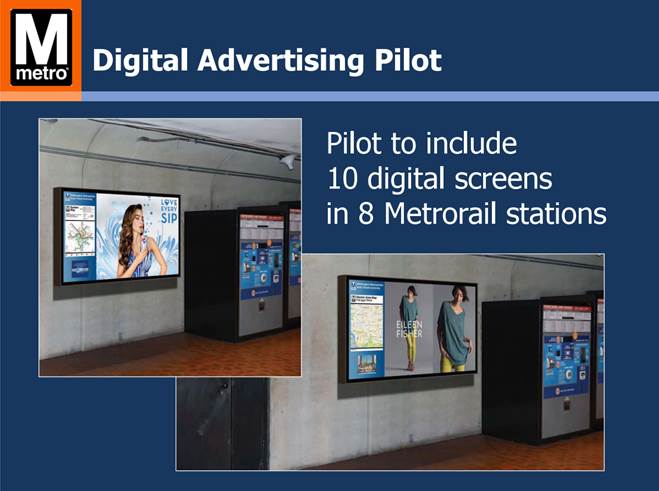
She says riders at Gallery Place will be the first to see new digital advertising boards this spring that will replace existing advertising spots and allow Metro to change the ads more often to bring in more money.
The digital ads will also go up at Pentagon, Metro Center, Farragut North, Farragut West, Federal Center, Capitol South and Foggy Bottom stations.
Another way to bring聽in more money is to draw more riders outside of rush hour. Bowersox says partnerships with large events, like the auto show or community institutions like the National Zoo, can help ease weekend traffic choke points and boost ridership.
鈥淏ao Bao sells,鈥� she says.
Other new ads could come to fare gates and include advertising covering the full interior of a rail car.
Metro鈥檚 financial staff plans to pay off a $220 million debt due in October and聽is聽considering refinancing other loans.
The system is limited to spending reimbursements聽covered by federal grants because of a lack of control in the past. Metro has laid out plans to the Federal Transit Administration on how it will turn things around.
Overall, the issue, including extra documentation requirements, means Metro only receives federal grant money at a trickle rather than all at once.
MetroAccess costs to spill over
Looking through the next decade, Metro staff are concerned that MetroAccess growth could lead to significant costs for taxpayers and riders of all parts of the bus and rail system. Paratransit service is required under the Americans with Disabilities Act and more aging people are likely to use the service.
鈥淧aratransit service is a safety net,鈥� assistant general manager聽Christian Kent says. 鈥淚t鈥檚 not necessarily that we want to see lower numbers of eligible customers, what we want to see is simply fewer trips.鈥�
Board chair聽Downey points out that an increase in riders would lead to costs that spread across the system.
鈥淭he rider pays very little, pays more than our regular riders but [it] comes nowhere near covering the cost, therefore, that $50-90 million comes to our bottom line. Either we raise fares on our regular riders to cover that, or we turn to the jurisdictions and say, 鈥榳e must provide this, we need more in the way of subsidy.鈥� It鈥檚 not an optional item,鈥� Downey says.
Metro hopes that talking to riders about other options they have on lines, making stops more accessible and coming up with alternative services can cut ridership from the high-end forecast of 3.7 million riders in 2025 to the low-end forecast of 2.6 million riders.聽聽New taxi options would be an example of an alternative service.
Virginia operates paratransit services at lower costs than those in D.C. and Maryland, so some board members want聽to see information shared about ways to keep those costs down. Another option is to get more human services agencies involved in the transit system to combine transportation with the services that some riders need.
Metro leaders are quick to point out that this is not a management issue, but rather reflects national demographic changes that impact plans for everything from Social Security to local government services.
鈥淭his is not a problem of 鈥榳e鈥檙e not doing the program correctly,鈥� this is coming to terms with something that is happening across the country,鈥� former Takoma Park mayor Kathy Porter says.
鈥淲e baby boomers, I鈥檓 one of them, we have distorted the culture as we have moved through, sort of like the bulge through the snake,鈥� she says.


